

Home security is not something you set once and forget. Your home changes with the seasons, and so do the risks around it. What keeps your property secure in summer may not be enough in winter. Holiday travel creates different vulnerabilities than a quiet week in spring. Weather, routines, travel habits, and even daylight all affect how well your security system performs.
A strong security setup is not just about having cameras and alarms. It is about knowing when to adjust them. Seasonal home security is really about staying one step ahead. The smarter your system adapts, the safer your home stays.
Let’s walk through how to adjust your home security for winter, summer, and holiday risks without overcomplicating the process.
Why Seasonal Security Adjustments Matter
Home security works best when it reflects how people actually live. That matters because routines shift throughout the year.
Why seasonal changes affect home security
- Weather affects equipment: Cold, heat, rain, and storms can interfere with cameras, sensors, and outdoor devices.
- Daily habits change: Families travel more in summer, stay out later during holidays, and spend more time indoors in winter.
- Criminal patterns shift: Break-in risks often rise during travel-heavy seasons and major holidays.
A system that works well in one season may need small but important changes in another.
Winter Home Security: Cold Weather, Long Nights & Empty Homes
Winter brings a very different security profile. Days are shorter, nights are longer, and many homes become more vulnerable during cold weather.
1. Check Outdoor Cameras for Cold Weather Performance
- Winter temperatures can affect battery life and camera reliability.
- Snow, frost, and condensation can block visibility.
- Clean camera lenses regularly and check weather seals.
Cold weather can quietly reduce camera performance. A lens covered in frost is just as useless as no camera at all.
2. Adjust Motion Sensors for Early Darkness
- It gets dark earlier in winter, which changes how outdoor sensors behave.
- Shadows, headlights, and wind-blown debris can trigger false alerts.
- Recheck motion sensitivity and angle settings.
Winter evenings create more visual noise. Fine-tuning sensors helps reduce false alarms.
3. Use Smart Lighting to Offset Longer Nights
- Longer nights make dark entry points more vulnerable.
- Schedule porch lights, pathway lights, and interior lamps.
- Smart lighting helps your home look occupied even when it is not.
Light is one of the simplest and cheapest deterrents available.
4. Protect Against Winter Utility Risks
- Security is not just about intruders in winter.
- Frozen pipes, heater failures, and power outages can become major problems.
- Add smart leak sensors and temperature alerts.
A secure home should also be protected from seasonal damage, not just break-ins.
Summer Home Security: Travel, Open Windows & Outdoor Activity
Summer often means vacations, weekend trips, and more time spent outside. That also means more opportunities for security gaps.
1. Secure Doors and Windows More Carefully
- Open windows are common in summer and easy to forget.
- Window sensors become more important during warmer months.
- Double-check side windows, garage entries, and sliding doors.
Summer convenience can create easy access points if you are not careful.
2. Adjust Camera Coverage for Outdoor Activity
- Summer means more motion outdoors - kids, pets, guests, deliveries.
- Review camera zones to avoid constant unnecessary alerts.
- Focus on entry points, driveways, and blind spots.
A camera that alerts you every five minutes becomes easier to ignore.
3. Prepare for Vacation Security
- Summer travel leaves homes empty more often.
- Set lighting schedules, pause deliveries, and notify trusted neighbors.
- Make sure mobile alerts are active before leaving.
Vacations should not advertise an empty house.
4. Protect Wi-Fi and Smart Devices
- More remote access often means more app use while traveling.
- Secure your system with strong passwords and two-factor authentication.
- Update apps and firmware before long trips.
If your security system is smart, it also needs cybersecurity attention.
Holiday Home Security: Packages, Travel & Predictable Routines
Holiday season brings one of the busiest times of year for both homeowners and opportunistic thieves.
1. Watch Deliveries and Porch Theft
- Package theft rises during gift-heavy seasons.
- Use video doorbells, parcel lockers, or neighbor pickup help.
- Delivery visibility matters more during holidays than almost any other time.
A box left outside too long can attract the wrong kind of attention.
2. Adjust for Holiday Travel
- Holiday trips often follow predictable travel patterns.
- Empty homes become easier to identify when lights stay off and packages pile up.
- Use timers, smart blinds, and driveway activity when possible.
The goal is simple: make your home look lived in.
3. Be Mindful of Decorations
- Holiday lights and décor can block cameras or interfere with sensors.
- Check sightlines after decorating.
- Make sure wreaths, lights, and inflatables do not obstruct security devices.
Decorations should improve curb appeal, not reduce visibility.
4. Avoid Oversharing Travel Plans
- Posting travel plans in real time can expose your absence.
- Share photos after returning, not while away.
- Limit public details about dates and locations.
Digital habits can affect physical security more than most people realize.
Spring and Fall Matter Too
Winter, summer, and holidays get most of the attention, but spring and fall are ideal for maintenance.
Use seasonal transition months to
- Replace batteries
- Clean cameras and sensors
- Test alarms and notifications
- Review app settings
- Trim landscaping blocking visibility
These quieter months are the best time to prepare for the busier ones.
Seasonal Maintenance Checklist
Every season, review these basics
- Test all sensors
- Clean camera lenses
- Check battery health
- Update firmware
- Review motion zones
- Confirm mobile alerts
- Inspect outdoor lighting
- Reassess entry point coverage
Small seasonal checks prevent bigger problems later.
Common Seasonal Security Mistakes
Avoid these easy-to-miss issues
- Ignoring weather impact on outdoor devices
- Forgetting to adjust motion sensitivity
- Leaving vacation signs visible
- Blocking cameras with decorations or plants
- Skipping app and firmware updates
Most seasonal security issues come from small oversights, not major failures.
How to Keep Seasonal Security Simple
Security does not need to become complicated just because the seasons change.
Keep it manageable
- Review your system every 3 months
- Adjust only what changed
- Focus on weather, visibility, and routine shifts
- Prioritize the highest-risk areas first
You do not need a new system every season. You just need a smarter one.
Conclusion
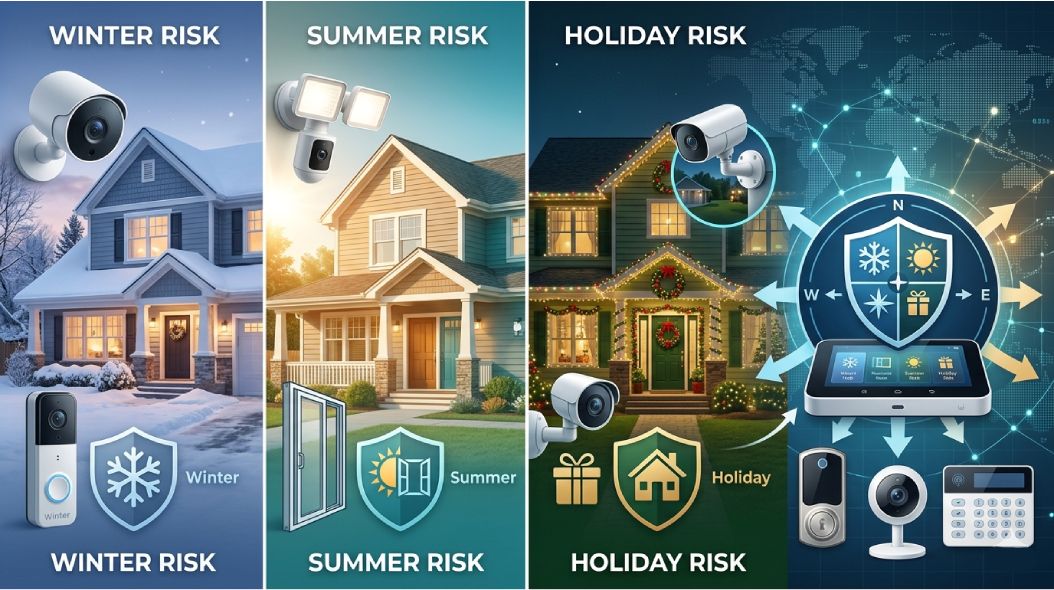
Home security is not static, and your system should not be either. Winter brings longer nights and weather stress. Summer creates travel gaps and open access points. Holidays increase deliveries, empty homes, and predictable routines. Each season changes how your home should be protected.
The good news is that seasonal security does not require major upgrades. Most of the time, it just requires small adjustments made at the right time. A cleaner camera, a better light schedule, a smarter motion setting, or a quick app update can make a meaningful difference.
Good home security is not only about what you install. It is also about how well you adapt it throughout the year.
FAQs
Q. How often should I adjust my home security system?
A seasonal review every three months is a practical way to keep your system working efficiently year-round.
Q. Why does winter affect home security equipment?
Cold weather can reduce battery life, create lens obstruction, and affect outdoor sensor performance.
Q. What is the biggest summer home security risk?
Vacation travel is one of the biggest summer risks because empty homes are easier to target.
Q. How do holidays increase home security risks?
Holiday travel, package deliveries, and predictable routines make homes more vulnerable to theft.
Q. What is the easiest seasonal security upgrade?
Adjusting lighting schedules is one of the simplest and most effective seasonal security improvements.