

When shopping for a home security system, one of the first questions homeowners ask is, "How many security cameras do I actually need?" It's a fair question, but the answer isn't as simple as choosing a number. Every home is different. A small apartment has very different security needs than a two-story house with a garage, backyard, and multiple entry points.
Many people assume that installing more cameras automatically means better security. In reality, the effectiveness of a surveillance system depends less on the number of cameras and more on where they are placed and what they are monitoring. A thoughtfully planned four-camera setup can often provide better coverage than a home with eight poorly positioned cameras.
Instead of trying to cover every square foot of your property, the goal should be to eliminate blind spots and monitor the areas that matter most. By understanding your home's layout and identifying vulnerable locations, you can build a security system that offers reliable protection without overspending on unnecessary equipment.
Start by Assessing Your Home's Layout
Before deciding how many cameras to buy, take a walk around your property. Think like someone trying to enter your home without permission. Which doors or windows would be the easiest to access? Are there hidden corners where someone could approach without being seen? Is your driveway visible from the street, or is it partially blocked by landscaping?
The size and design of your home play a significant role in determining camera placement. A compact apartment may only require one or two cameras, while a larger property with multiple entrances will naturally require additional coverage.
Rather than focusing on the square footage alone, pay attention to the number of access points. Every exterior door, first-floor window, garage entrance, and backyard gate represents a potential entry point that deserves consideration.
Why Entry Points Should Always Be Your Priority
Statistics consistently show that burglars usually enter through the most accessible openings. That means your front door, back door, patio door, garage entrance, and easily accessible windows should receive the highest priority when placing cameras.
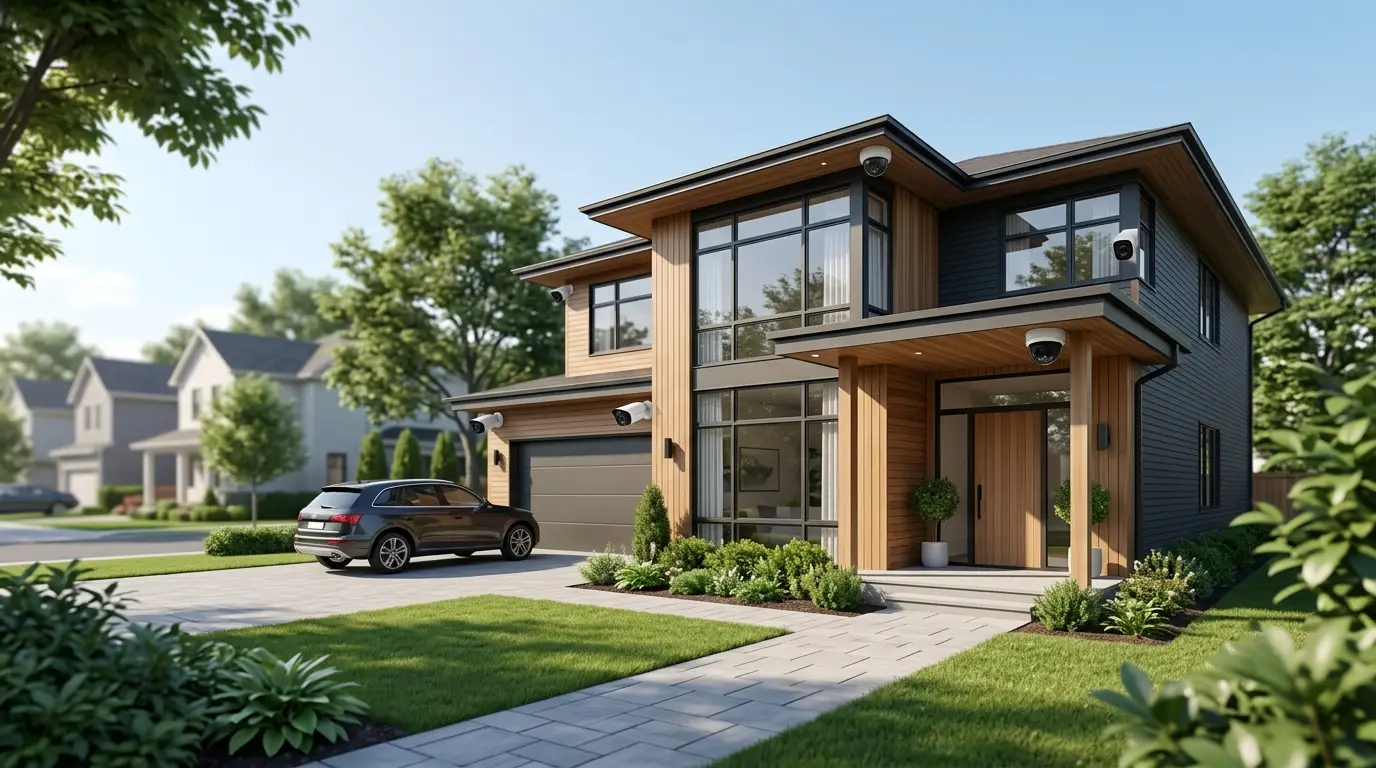
A camera overlooking the front door not only records visitors but also captures package deliveries, unexpected guests, and suspicious activity. A rear camera provides visibility over areas that are often hidden from neighbors and street traffic. If your garage has direct access to your home, monitoring that entrance is just as important as securing the main front door.
By focusing first on these vulnerable locations, you create a strong first line of defense without needing excessive equipment.
Recommended Camera Count by Home Type
Although every property is unique, most homes fall into a few common categories.
Apartments and Condos
For apartments, two cameras are often sufficient. One camera can monitor the main entrance, while another indoor camera can provide visibility over the primary living space. If your apartment has a balcony or private patio with direct access, an additional outdoor camera may be worth considering.
Small Single-Family Homes
A typical two or three-bedroom house usually benefits from three to four cameras. One camera at the front door, one covering the backyard, one monitoring the driveway or garage, and an indoor camera positioned in a central hallway provide balanced coverage for most homes.
Medium-Sized Homes
Homes with multiple entrances and larger outdoor spaces generally require four to six cameras. Additional cameras may be needed to monitor side gates, detached garages, or areas hidden by fencing and landscaping.
Large Homes
Larger homes often require six to ten cameras depending on the property's layout. Multiple outdoor cameras, driveway surveillance, backyard coverage, and strategically placed indoor cameras help ensure there are no vulnerable blind spots.
The goal isn't to install cameras everywhere - it is to monitor the locations that present the greatest security risk.
Indoor Cameras vs. Outdoor Cameras
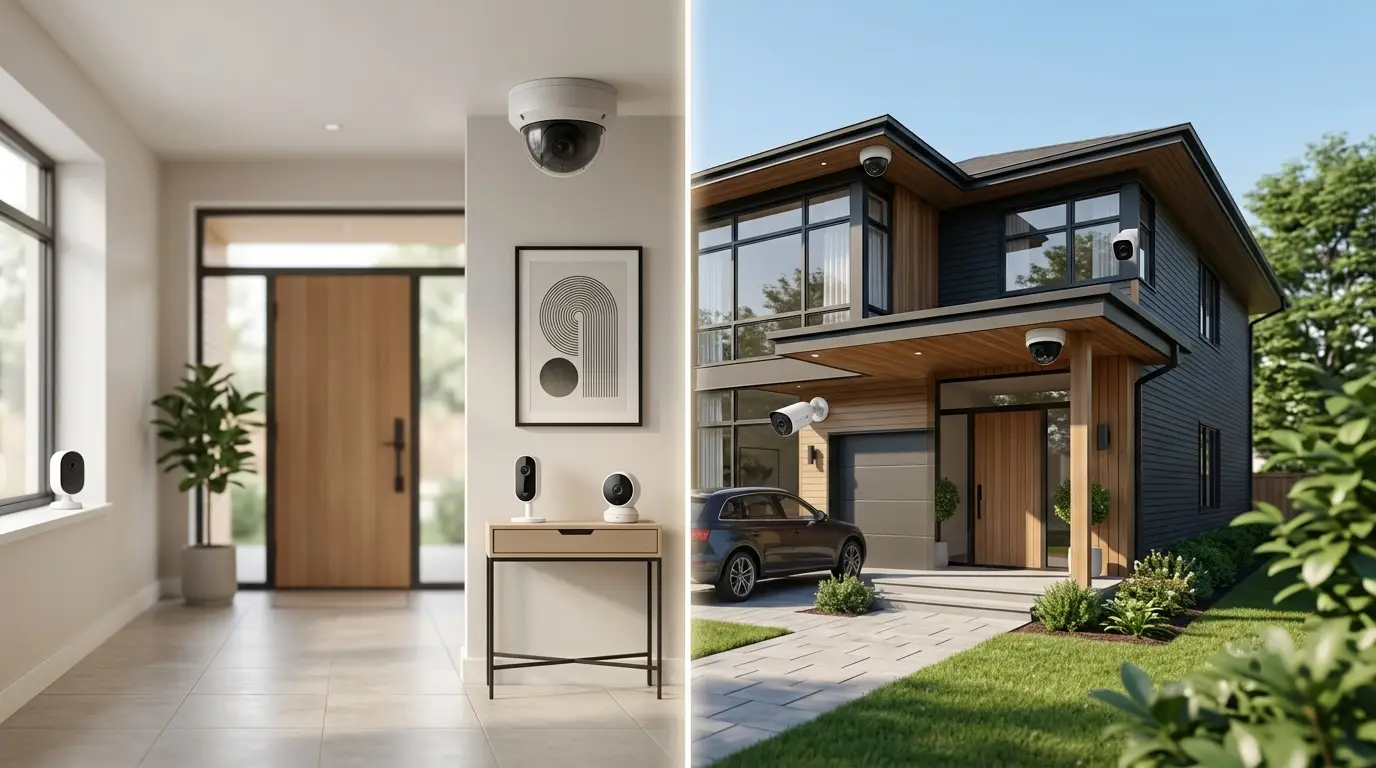
Many homeowners assume outdoor cameras are enough. While exterior surveillance is essential, indoor cameras provide an additional layer of protection if someone manages to enter the home.
Outdoor cameras are designed to monitor activity before an intruder reaches your door. They help deter criminal behavior, capture suspicious movement, and provide valuable evidence if an incident occurs.
Indoor cameras, on the other hand, help monitor hallways, staircases, living rooms, or entryways. They can confirm whether someone has entered the property and allow homeowners to check on children, elderly family members, or pets while away.
Using both indoor and outdoor cameras creates multiple layers of security rather than relying on a single line of defense.
Don't Forget About the Driveway and Garage
Garages often contain expensive tools, bicycles, sporting equipment, and vehicles. In many homes, they also provide direct access to the interior.
A camera overlooking the driveway can capture approaching vehicles, visitors, and unusual activity before someone reaches your home. If possible, position the camera high enough to capture clear facial images while still covering the entire driveway.
For detached garages or workshops, consider installing an additional camera specifically dedicated to that structure.
Should You Monitor Your Backyard?
The backyard is one of the most overlooked areas in residential security.
Unlike the front of the home, backyards are usually hidden from public view, giving intruders more privacy to attempt a break-in. Patio doors, sliding glass doors, basement entrances, and backyard gates are common targets because they are less visible from the street.
A weather-resistant outdoor camera positioned to cover these areas significantly improves your home's overall security.
How Camera Placement Matters More Than Quantity
Buying additional cameras doesn't automatically make your home safer.
A poorly placed camera may capture a fence instead of an entry point or point directly into sunlight, making footage difficult to review. Cameras mounted too high may miss facial details, while those mounted too low can become easy targets for vandalism.
Take time to identify blind spots and position cameras where they have a clear view of entrances, walkways, and high-traffic areas. Proper placement often provides better protection than simply increasing the number of devices.
Factors That Influence the Number of Cameras You Need
Several factors determine the ideal camera count for your property.
Consider:
- The size of your home
- The number of exterior entrances
- Detached buildings or garages
- Backyard accessibility
- Driveway length
- Local crime rates
- Valuable outdoor equipment
- Existing lighting conditions
Every property is unique, which is why there is no universal "perfect number."
Common Mistakes Homeowners Make
Many homeowners unintentionally reduce the effectiveness of their surveillance systems by making simple planning mistakes.
One common error is focusing only on the front door while ignoring side entrances or rear access points. Another is installing cameras solely because a package includes a certain number rather than planning coverage strategically.
Some homeowners also overlook lighting. Even cameras with excellent night vision perform better when supported by well-placed outdoor lighting.
Finally, avoid pointing cameras toward neighbors' private spaces, as doing so may create privacy concerns or violate local regulations.
Can You Have Too Many Cameras?
Surprisingly, yes.
Installing unnecessary cameras increases equipment costs, storage requirements, maintenance, and alert notifications. Too many overlapping views can also make reviewing footage more time-consuming.
Instead of covering every corner of your property, focus on meaningful coverage. Every camera should have a clear purpose, whether it is monitoring an entry point, driveway, garage, or backyard.
A smaller, strategically planned system is often more effective than a larger, poorly organized one.
Planning for Future Expansion
One of the advantages of modern wireless security systems is their flexibility. You don't have to purchase every camera on day one.
Many homeowners begin with essential areas such as the front door, driveway, and backyard. As their needs change, they gradually add indoor cameras, garage monitoring, or additional outdoor coverage.
Choosing a system that supports future expansion allows you to improve security over time without replacing your existing equipment.
Conclusion
The number of security cameras your home actually needs depends on your property's size, layout, and unique security concerns - not on an arbitrary number. For many homes, three to six well-positioned cameras provide excellent protection, while larger properties may require additional coverage.
Rather than asking, "How many cameras should I buy?" the better question is, "Which areas of my home need the most protection?" By identifying vulnerable entry points, eliminating blind spots, and investing in quality camera placement, you can build a security system that protects your home efficiently without spending more than necessary.
Remember, the best home security system isn't the one with the most cameras - it's the one that gives you complete confidence that your home is protected where it matters most.
FAQs
Q. How many security cameras does the average home need?
Most average-sized homes require between 3 and 6 security cameras to cover key entry points, the driveway, backyard, and garage.
Q. Is one security camera enough for an apartment?
For small apartments, one camera may be sufficient, but adding a second camera improves coverage of the entrance and main living area.
Q. Should security cameras be installed inside the home?
Yes. Indoor cameras provide an additional layer of protection and help verify activity if someone enters your home.
Q. Where should outdoor security cameras be placed?
Focus on the front door, back door, driveway, garage, and any side entrances or gates that could be used to access your property.
Q. Is it better to buy more cameras or higher-quality cameras?
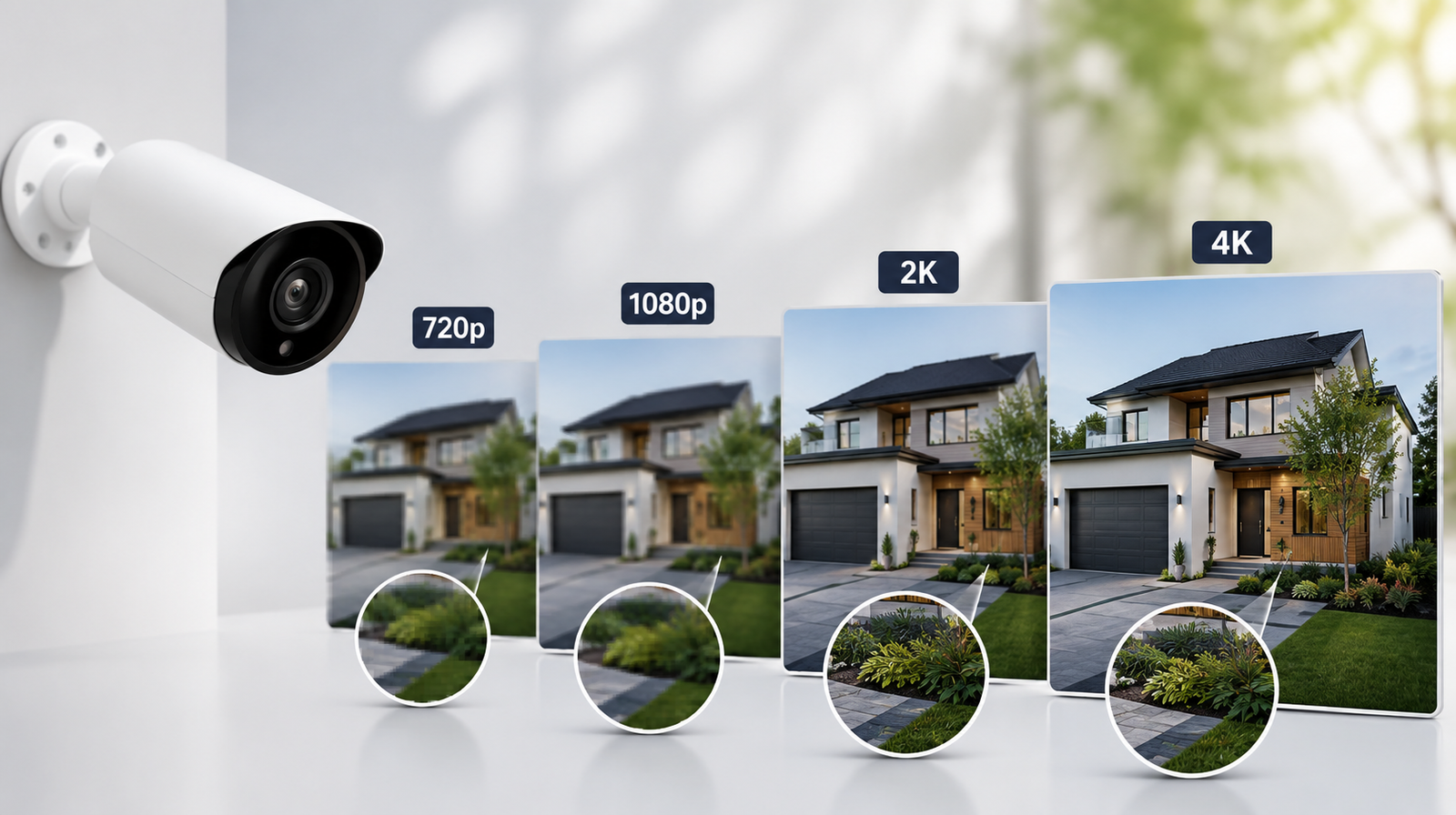
In most cases, investing in fewer high-quality cameras with proper placement delivers better results than installing many lower-quality devices.